
Three different tests give three different lists
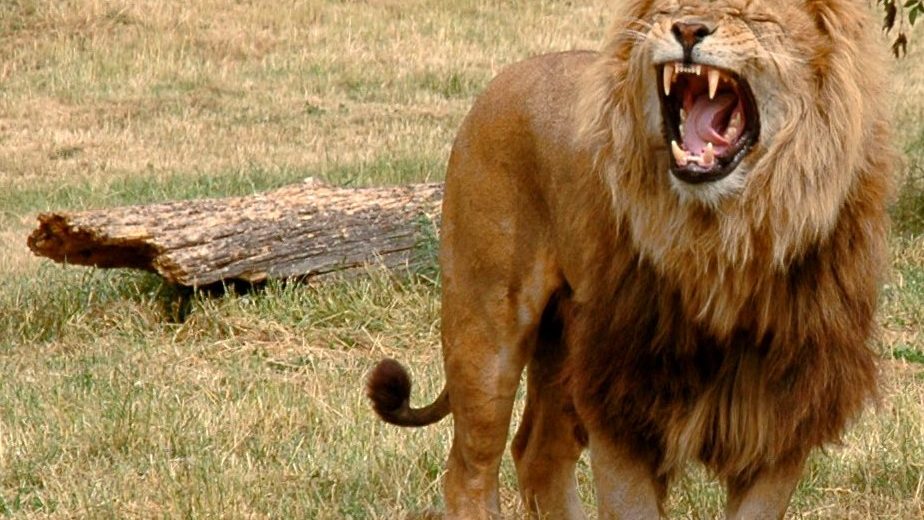
Before DNA sequencing existed, the original split between "big cats" and "small cats" was based on sound. According to Panthera's Gregory Breton, eighteenth- and nineteenth-century naturalists organized the cat family into two informal groups, Pantherinae and Felinae, on a simple test: did it roar, or did it purr? The four cats that clearly roared, the lion, tiger, jaguar, and leopard, became the original "big cats," and everything else, regardless of size, was a "small cat."
Size gives a different answer, and it's the one most people reach for by default. If you sort cats by weight, the snow leopard, cheetah, and puma get added to the four roaring cats, rounding the list out to seven, which is exactly how Panthera, the global wild cat conservation organization, lists its "big cats" on its own website. Staff at the organization point out how shaky that line is: Small Cat Conservation Science director Wai-Ming Wong has noted that some adult clouded leopards and Eurasian lynx, both officially "small cats," weigh about as much as an adult Arabian leopard, and that some pumas outweigh some leopards outright. Genetics gives a third answer, and it's the one this article uses as the formal baseline: the 2006 genetic assessment that mapped the cat family's eight lineages placed exactly five species together in genus Panthera, based on shared ancestry rather than weight or noise. That's the narrowest of the three lists, and it excludes both the cheetah and the puma.
The genetic definition comes down to one throat ligament
The genetic case for five species rests on more than a shared branch of the family tree. A 2002 study in the Journal of Anatomy by Gerald Weissengruber and colleagues dissected the hyoid apparatus, the small bone-and-cartilage structure that anchors the base of the tongue and larynx, in the lion, jaguar, tiger, cheetah, and domestic cat. It found that in the lion, jaguar, and tiger, the epihyoid, one segment of that structure, is a stretchable elastic ligament rather than solid bone, and separate anatomical surveys have found the same elastic ligament in the leopard and snow leopard, rounding out all five Panthera species. Every other cat the study examined, including the cheetah, has a fully ossified, rigid epihyoid instead.
That structural split lines up with an old hypothesis first proposed by the anatomist Richard Owen in 1835 and cited directly in the Weissengruber paper: cats with the elastic ligament can roar but not purr continuously, while cats with the ossified bone can purr but not roar. The elastic version lets the larynx drop and the vocal tract stretch out during a roar, in the same way pulling a trombone's slide changes its pitch, but that same slack prevents the larynx from locking into the fixed position a continuous purr needs. It's a trade-off, not just a difference in degree: nothing in the cat family does both.
One of the five has the ligament and still can't roar
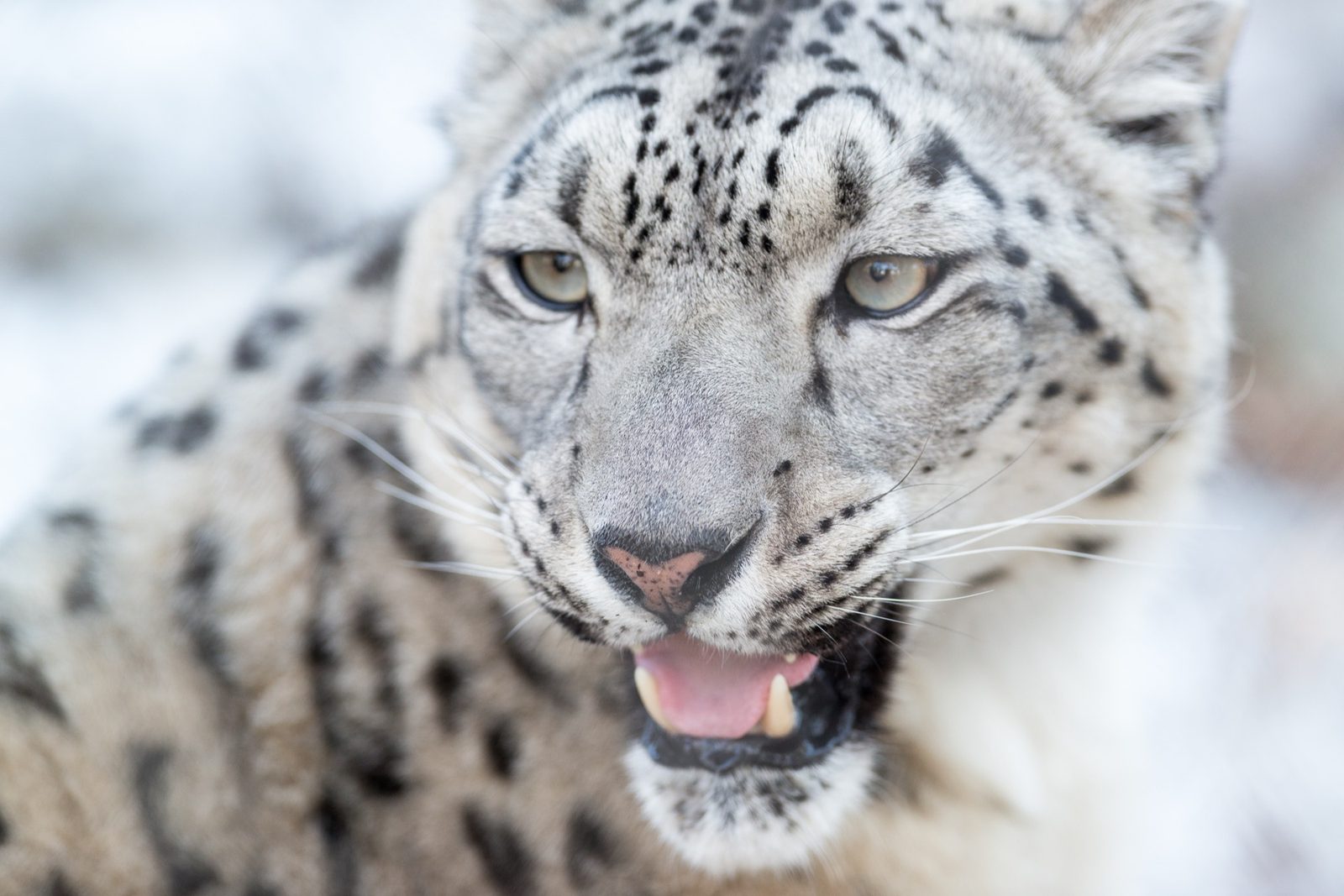
The ligament isn't the whole mechanism, and that's where the snow leopard falls through a crack in its own genus. In a 1989 study in the Journal of Anatomy, M.H. Hast dissected the larynges of 14 cat species, drawing on representative specimens from every genus in the family, and found that the lion, jaguar, leopard, and tiger all share a large, square-shaped pad of fibroelastic tissue built into their vocal folds. Hast's paper states plainly that this structure, present in genus Panthera "with the exception of the snow leopard," is what gives those four cats a sound generator capable of producing the volume and low pitch of a true roar. The snow leopard has the elastic hyoid ligament of a roaring cat, and it is missing the vocal-fold tissue that a roar actually depends on.
A 2011 study in PLOS ONE by Sarah Klemuk, Tobias Riede, Edward Walsh, and Ingo Titze examined that fibroelastic pad in lion and tiger vocal folds directly, finding it consists of fat cells embedded in a lattice of collagen, elastin, and hyaluronan, giving the vocal folds a large, square cross-section rather than the thin bands found in most mammals. That specific shape, the study concluded, is what lets a lion or tiger begin phonating at low lung pressure and sustain the roar's characteristic 36 to 81 hertz frequency for half a second to a second and a half at a stretch. Without that fatty tissue layer, the snow leopard instead relies on chuffing, also called prusten, a soft, repeated puffing exhalation used as a close-range greeting. It isn't a consolation sound unique to non-roarers, either: jaguars, which can roar, chuff as well, so the snow leopard isn't using a fallback invented for cats that can't manage anything louder. The irony is that, per a 2010 supermatrix analysis in Molecular Phylogenetics and Evolution by Byron Davis, Gang Li, and William Murphy, the snow leopard's closest living relative within Panthera is the tiger, its sister species on the genus's family tree. The split between roaring and not roaring runs straight through what is otherwise the most closely related pair of cats in the entire genus.
.jpg)
The cheetah and the puma get in by size, not by blood
If the cheetah and puma don't have the ligament or the vocal-fold pad, why does Panthera's own "big cats" list include them? Purely on size and ecological role: both are large, wide-ranging apex predators, and Panthera's public materials group them with the five genus-Panthera species on that basis, even while acknowledging internally that the two purr like a housecat rather than roar. Genetically, that inclusion cuts against the grain. The same 2006 genetic assessment that defined the Panthera lineage placed the cheetah and the puma in an entirely separate branch of the cat family tree, alongside the jaguarundi, a lineage that the same study's divergence dating found is more closely related to the domestic cat than to the tiger or lion. Small wild cats that never evolved either the elastic ligament or the fibroelastic pad at all, like the fishing cat and the margay, sit in yet another branch of that same tree, no closer to Panthera than the cheetah is.
The species with the strongest genetic claim to sit next to the five roaring cats isn't on Panthera's size-based list at all. A 2023 whole-genome study in Science Advances by Jiaqing Yuan and colleagues dated the split between the clouded leopard's genus, Neofelis, and genus Panthera to roughly 6.19 million years ago, with a wide confidence interval of 4.05 to 8.95 million years, making Neofelis the single closest living relative to the five-species Panthera lineage of any cat alive. Despite that, the clouded leopard is conventionally filed as a "small cat," the same category as the far more distantly related cheetah, and it lacks the size and vocal anatomy that would put it on any of the popular lists. It's a strange result on paper: the cat genetically nearest to Panthera isn't called a big cat, and two of the cats that are called big cats sit in the same branch as house cats. It's also a common source of visitor confusion at zoos and wildlife sites; a recurring question on Quora asks, in essence, how a species with roaring anatomy in its genus can still fail to roar, the exact puzzle this article's underlying research resolves. The confusion the saber-tooth "tiger" causes runs the other direction: it never belonged to Panthera in the first place, its lineage having split off onto its own extinct branch of the cat family tree an estimated 20 million years ago, nearly double the age of the common ancestor the 2006 genetic assessment traces the Panthera lineage itself back to.