.jpg)
What a sea urchin actually is
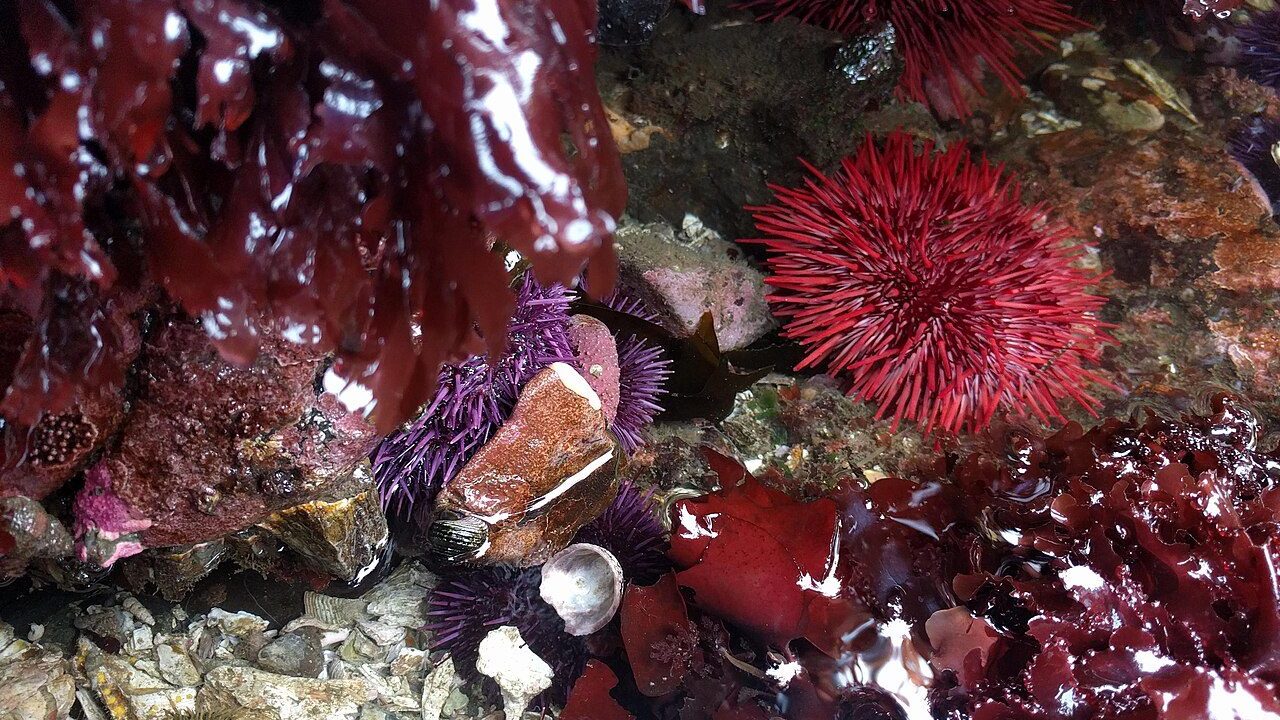
A sea urchin is not a shellfish or a "spiny shell" in the way many people assume. It is an echinoderm, part of the same phylum as sea stars, sea cucumbers, and sand dollars, and one of roughly 950 living species found from intertidal rock pools to depths beyond 5,000 meters. The animal's body is built around a test, a rigid endoskeleton of fused calcium-carbonate plates arranged in the five-part radial symmetry typical of echinoderms, with the visible spines attached at ball-and-socket joints that let the animal rotate them for defense, wedging into crevices, or slow locomotion.
Movement and feeding both run on a water vascular system unique to echinoderms: seawater enters through a porous plate called the madreporite and is pumped by hydraulic pressure into hundreds of tube feet that grip the substrate. The mouth, on the underside of the test, holds a five-sided chewing structure of interlocking plates and teeth that Aristotle described in his writings on animals; biologists still call it Aristotle's lantern, and urchins extend it to scrape algae off rock, occasionally excavating shallow pits in stone over years of grazing at the same spot. Despite the intimidating look of a spine-covered animal, the overwhelming majority of the roughly 950 living species are harmless if handled carefully. The exception that proves the rule is Toxopneustes pileolus, the flower urchin, which delivers venom not through its spines but through flower-shaped pincer organs called pedicellariae and holds the Guinness World Record for most dangerous sea urchin, with documented cases of respiratory distress and partial paralysis. That's a reputation-outrunning-data pattern that shows up across the animal kingdom, running in the opposite direction here: one genuinely dangerous species gets projected onto hundreds of harmless ones. Not every stinging sea animal carries a punch, either: a moon jellyfish's sting barely registers on human skin at all, its nematocyst tubules simply too short to break the epidermis.
A red sea urchin alive today may have been born before California was a state
The red sea urchin, found along the Pacific coast from Baja California to Alaska, is the largest urchin species and among the longest-lived animals ever documented. Thomas Ebert's 2008 study in Experimental Gerontology, based on decades of field tagging combined with radiocarbon dating of test material, found that survival probability does not decline across the largest size classes the way it does in almost every other studied animal, and that reproductive capacity holds steady with size rather than tapering off: the textbook signature of negligible senescence. Ebert put minimum documented lifespan past 100 years, and separate estimates based on growth-rate modeling have put some individuals above 200. A related study found no age-associated shortening of telomeres, the protective caps on chromosome ends whose erosion is one of the standard biological clocks of aging in most animals, in either long-lived or short-lived sea urchin species. That is evidence the mechanism these animals use to escape the usual aging process is different, not just slower.
A 2024 genome-sequencing study led by Jennifer Polinski at the Gloucester Marine Genomics Institute, published in Cell Reports, went looking for that mechanism directly: comparing the red sea urchin's genome against shorter-lived relatives turned up expanded gene families involved in immune defense, genome stability, and protein upkeep, plus a network of genes under selection tied to DNA-repair fidelity and mitochondrial function. It is the first genome-level account of the mechanism behind that resistance, filling in what the demographic and telomere studies could only infer from the outside.
That combination, a large, cognitively simple invertebrate that appears not to age in any conventional sense, has made red sea urchins a research subject in their own right for scientists studying the biology of aging, not just marine ecology. A different sea urchin entirely, thousands of miles away in the Caribbean, tells a starkly different story: a relative that isn't escaping mortality so much as being erased by it, twice.

The 1983–1984 die-off that flipped Caribbean reefs, and the 98% recovery gap that never closed
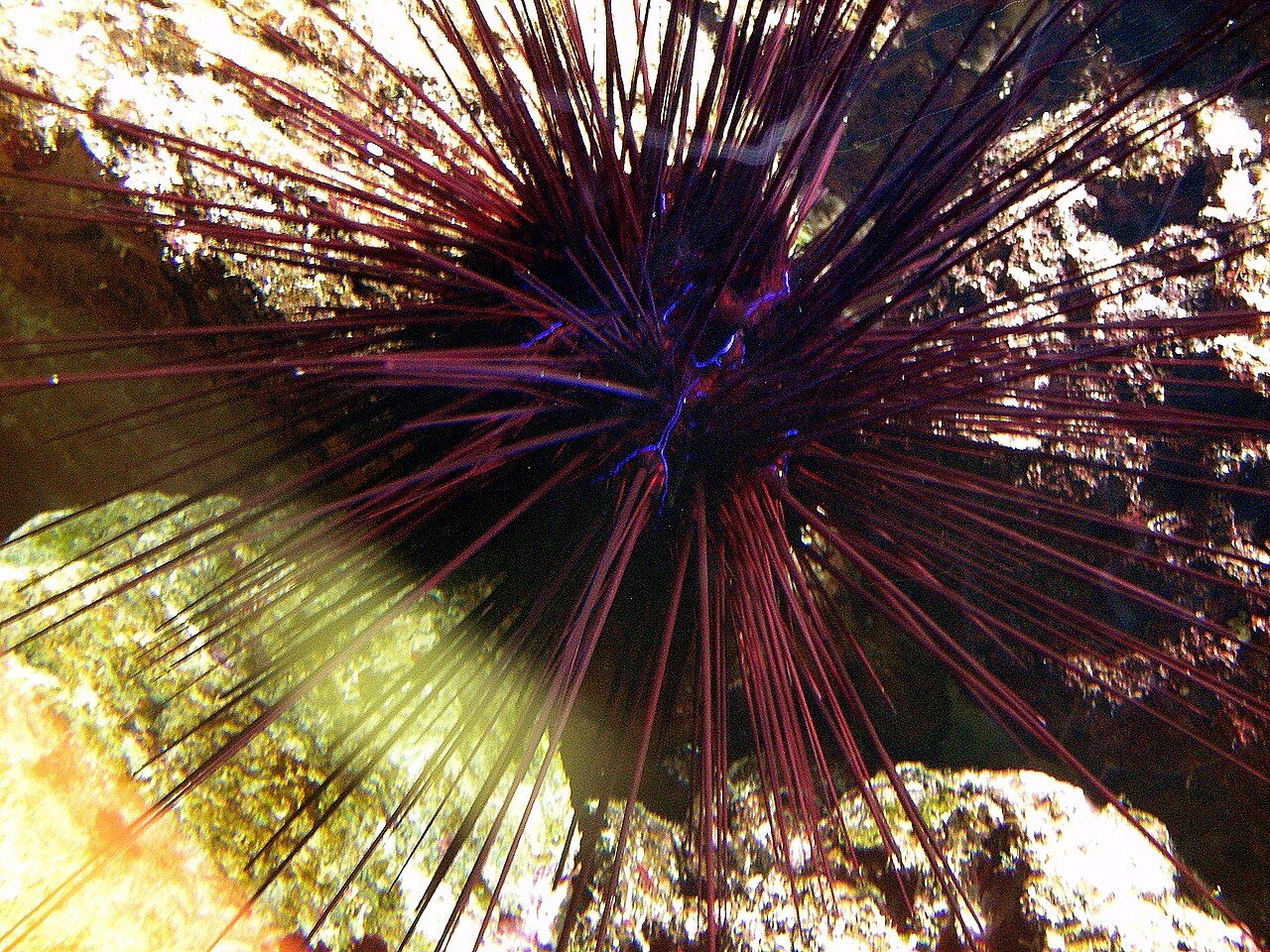
Diadema antillarum, the long-spined sea urchin, once blanketed Caribbean reefs in densities high enough to keep fast-growing algae from ever gaining a foothold. Starting in Panama in January 1983 and spreading across the entire Caribbean and Bermuda within about a year, an unidentified pathogen killed a mean of 98% of the population at surveyed sites (a minimum of 93% even at the least-affected locations), in what remains one of the most severe single-species die-offs ever recorded in the ocean. With the reefs' main algae-grazer gone, many Caribbean reefs underwent what ecologists call a phase shift, from coral-dominated communities to algae-dominated ones, because nothing was left to stop algae from overgrowing and smothering coral colonies. Four decades later, regional population densities remain at roughly 12% of pre-1983 levels. The species never meaningfully recovered, even as the cause of the original die-off was never definitively identified.
Then, starting in late January 2022 near St. Thomas in the U.S. Virgin Islands, it happened again. By late March the same symptoms (drooping spines, loss of tube-foot function, spine shedding, death within days) had reached the Lesser Antilles, Jamaica, and the Mexican Caribbean; by June it had spread to the Greater Antilles, Florida, and Curaçao, ultimately affecting at least 25 jurisdictions. This time, researchers had the tools to actually find the culprit. Ian Hewson, a professor of microbiology at Cornell University, led an investigation that identified a single-celled ciliate parasite closely related to Philaster apodigitiformis as the cause, publishing the result in Science Advances in April 2023: the first time a specific pathogen has been confirmed behind a Diadema mass mortality event. "Rarely are we afforded the opportunity to understand marine disease events in this detail, where we can actually work out a cause of it," Hewson said of the finding. It's the kind of confirmation a slow-motion population collapse in a very different animal still hasn't gotten: wild axolotls in Mexico City's canals have crashed from roughly 6,000 per square kilometer in 1998 to fewer than 35 in recent surveys, and researchers still can't point to one confirmed cause the way Hewson's team could for Diadema.
A second, unrelated way urchins get wiped out: killer whales
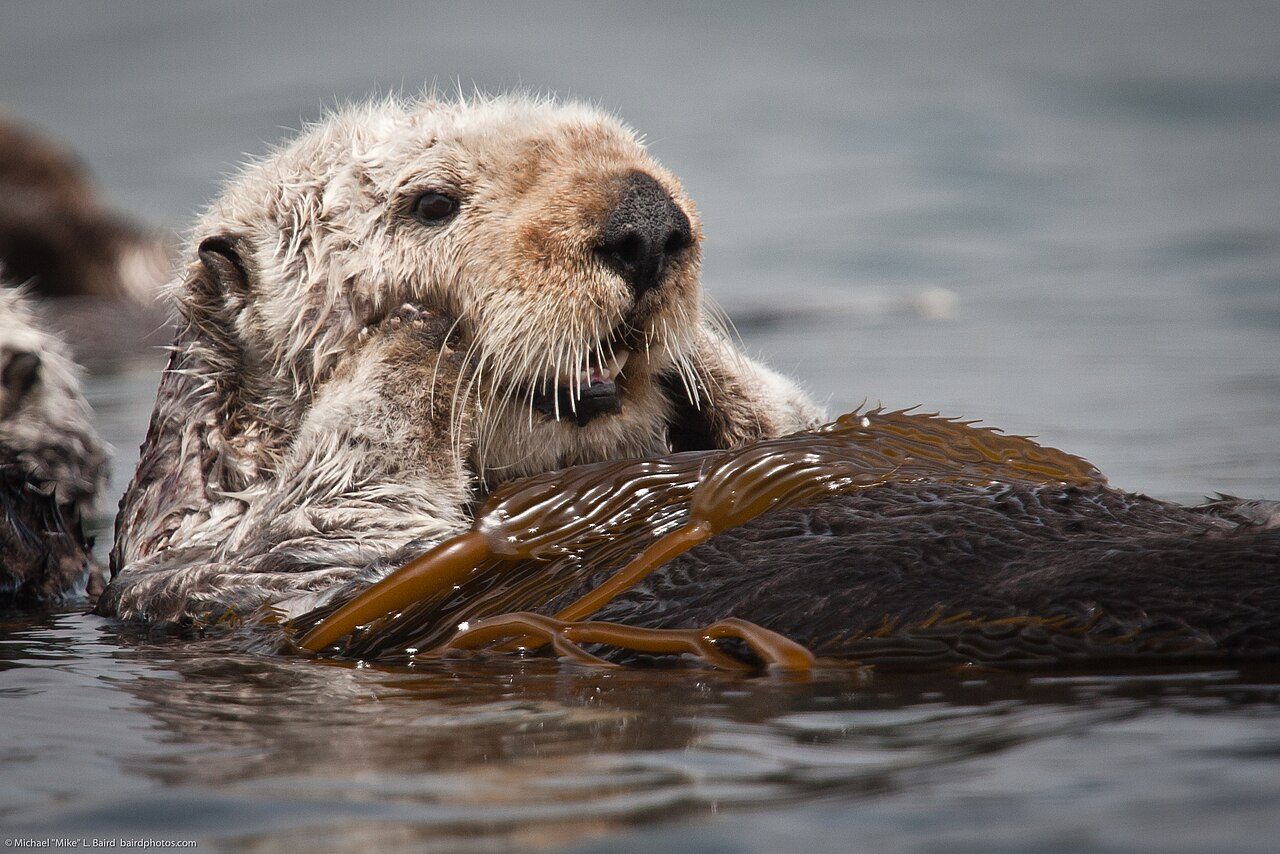
Pathogens are not the only force that can crash an urchin population, or the only one tied to a keystone predator several steps removed. On the Pacific coast, sea otters are the main check on urchin numbers in kelp forests, eating enough of them to keep grazing pressure low and kelp canopies intact. In 1998, ecologist James Estes and colleagues published a study in Science showing that a sudden, unexplained decline in sea otter populations across the western Aleutian Islands in the 1990s tracked closely with a rise in killer whale predation on otters (a documented shift in orca diet, likely driven by declines in the whales' usual prey), and that as otters disappeared, urchin numbers rose sharply and kelp forests were grazed down into barren rock in the areas hit hardest. It's a three-level chain (killer whale removes otter; otter absence releases urchin; urchin overgrazing removes kelp) that produces a similar end state to the Diadema die-offs: a marine landscape stripped of a foundational species, reached by triggering an urchin population explosion instead of a collapse, the reverse mechanism arriving at the same kind of ecological cliff edge.
The throughline across all three stories (a red sea urchin that barely ages, a Caribbean relative that has now collapsed twice, and a kelp forest reshaped by orca appetite three trophic levels away) is how much leverage a single group of slow-moving, spine-covered animals has over the marine habitats around it, in either direction: too many urchins and kelp forests disappear, too few and coral reefs lose their main defense against being overgrown.