
What actually happens after a bite: ten years of poison-center data
Abigail Kerns, Emily Scheffel, Rita Farah and Christopher Holstege, all working from the University of Virginia's Division of Medical Toxicology, published a retrospective review of the US National Poison Data System covering 2012 through 2022 in Wilderness & Environmental Medicine, posted online in December 2024. They found 15,299 reported Latrodectus exposures over that decade, concentrated in warm-weather states and during summer months.
The outcomes run well below the spider's reputation. Almost half of all cases, 48.6 per cent, were managed entirely outside a healthcare facility over the phone with a poison-control specialist. Hospital admission was required in 10.0 per cent of cases. Antivenom, the treatment most associated with a serious black widow bite, was given in only 3.4 per cent. The most common interventions by far were wound care, used in 43.7 per cent of cases, and benzodiazepines for muscle cramping, used in 18.6 per cent. Both target the symptoms, not the venom itself.
A real toxin, a tiny dose, and a spider that rations it
The potency comparison that shows up in almost every pest-control article is not wrong on its own terms. Toxicology references compiled on the NCBI Bookshelf's StatPearls series and summarized by the Burke Museum of Natural History and Culture put black widow venom at roughly fifteen times more lethal by weight than rattlesnake venom in mouse LD50 tests. What that comparison leaves out is dose: a black widow's venom glands hold a small fraction of a milligram, while a viper delivers many times more volume in a single strike. Potency per milligram and total danger per bite are different questions, and the poison-center numbers above answer the second one.
There's a further reason the numbers stay low: the spider does not always use the venom it has. David Nelsen, Wayne Kelln and William Hayes, working with western black widows (Latrodectus hesperus) at Loma Linda University, published a 2014 study in Animal Behaviour titled "Poke but don't pinch," showing that the species meters its venom according to the level of threat it perceives, delivering little or none in many defensive bites rather than a full envenomating dose every time. A bite from an animal capable of injecting potent venom is not the same thing as a bite that actually does. A different arachnid wears an even more misleading name: despite being called a false scorpion, the pseudoscorpion really does carry venom in its claws, something researchers have only started characterizing since 2018.
Why antivenom is controversial: a placebo-controlled trial on the nearest-studied relative
The low antivenom rate in the US data is not simply caution: it tracks a real controversy in the clinical literature. Geoffrey Isbister led a multicenter trial, published in Annals of Emergency Medicine in 2014 and known as RAVE-II, that randomized 224 patients bitten by the Australian redback spider (Latrodectus hasseltii, a close relative in the same genus with the same venom mechanism) to receive either intravenous antivenom or a saline placebo, on top of standard pain medication.
Two hours after treatment, 34 per cent of the antivenom group showed a clinically significant improvement in pain versus 23 per cent of the placebo group, a gap that did not reach statistical significance (P=.10). Among patients with systemic symptoms, resolution rates were nearly identical between the two arms, 26 per cent on antivenom against 22 per cent on placebo. The trial's conclusion was blunt: adding antivenom to standardized pain management did not produce a statistically significant improvement. That result, on the species where it has been tested most rigorously, is the clinical backdrop against which US clinicians decide when a black widow bite actually needs it.
Camel spiders, sharing the desert with real black widows, have picked up an entirely separate reputation for danger despite carrying no venom at all. The two animals sit at opposite ends of the same gap between fear and evidence.
What the toxin actually does to a nerve cell
The symptoms behind latrodectism (muscle cramping, sweating, and in severe cases labored breathing) trace back to a single protein, alpha-latrotoxin, that makes up the dangerous fraction of the venom. Bianka Klink, Afra Alavizargar and colleagues at the University of Münster used cryo-electron microscopy to resolve its structure before and after it inserts into a cell membrane, publishing the results in Nature Communications in October 2024.
Their structures show four helical bundles in the toxin rearranging into a roughly 15-nanometre stalk that drives into the membrane of a nerve cell, opening a channel that lets calcium ions flood in. That uncontrolled calcium influx is what triggers the massive, sustained release of neurotransmitters responsible for the muscle spasms and pain of a genuine envenomation. It is the first time anyone has resolved the mechanism at near-atomic detail, not just inferred it from its downstream effects.

The mate-eating myth: true for some species, nearly mythical for others
The idea that female black widows always eat their mates traces back to early laboratory observations where a single male and female were confined together in a small enclosure with no way for the male to leave. The Burke Museum's spider-myths project, summarizing the field literature on the US species, notes that under those artificial conditions cannibalism looked routine, but wild males have room to escape, and the outcome changes accordingly. Of the three black widow species native to the US, mate cannibalism has never been documented in the wild in the western black widow (Latrodectus hesperus), and while it does happen sometimes in the southern black widow (Latrodectus mactans), most males in that species still survive to mate again.
The species' taste for cannibalizing its own kind isn't limited to mates, either. J. Chadwick Johnson, Kathryn Kitchen and Maydianne Andrade, publishing in Ethology in 2010, studied sibling cannibalism among newly hatched Latrodectus hesperus spiderlings and found that how readily a brood turns on itself varies by maternal family line, tied to how well the mother provisioned her eggsac rather than being a fixed trait of the species. Separately, in Animal Behaviour in 2015, Luciana Baruffaldi and Maydianne Andrade found that adult males use contact pheromones on a female's web to judge how recently she has fed, and preferentially court well-fed females, an evolved strategy that lets a male steer clear of the hungriest, most cannibalism-prone mates, not just approach blind.
The myth is closer to fact in some of the black widow's South American relatives, where sexual cannibalism is frequent enough to be a defining feature of courtship rather than an occasional risk, a reminder that "black widow" covers roughly three dozen species with genuinely different behavior, not one uniform animal.
How many kinds of black widow there actually are
"Black widow" is a common name for part of the genus Latrodectus, which Wikipedia, citing the World Spider Catalog's genus entry, lists as containing 34 recognized species as of an October 2025 catalog check. North America alone hosts five: the southern black widow (Latrodectus mactans), western black widow (L. hesperus), northern black widow (L. variolus), red widow (L. bishopi) and brown widow (L. geometricus), the last of which has also spread to a much wider global range than the others.
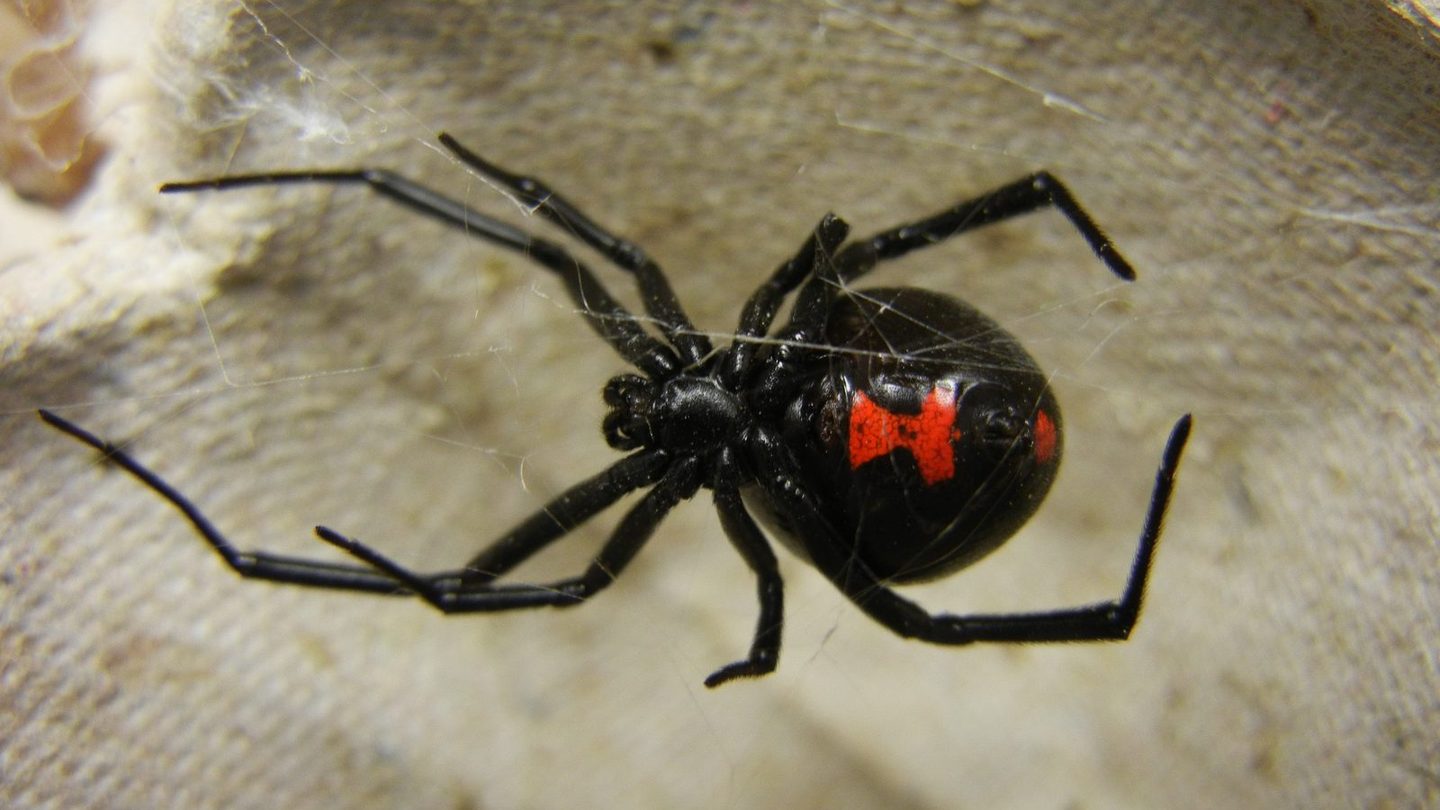
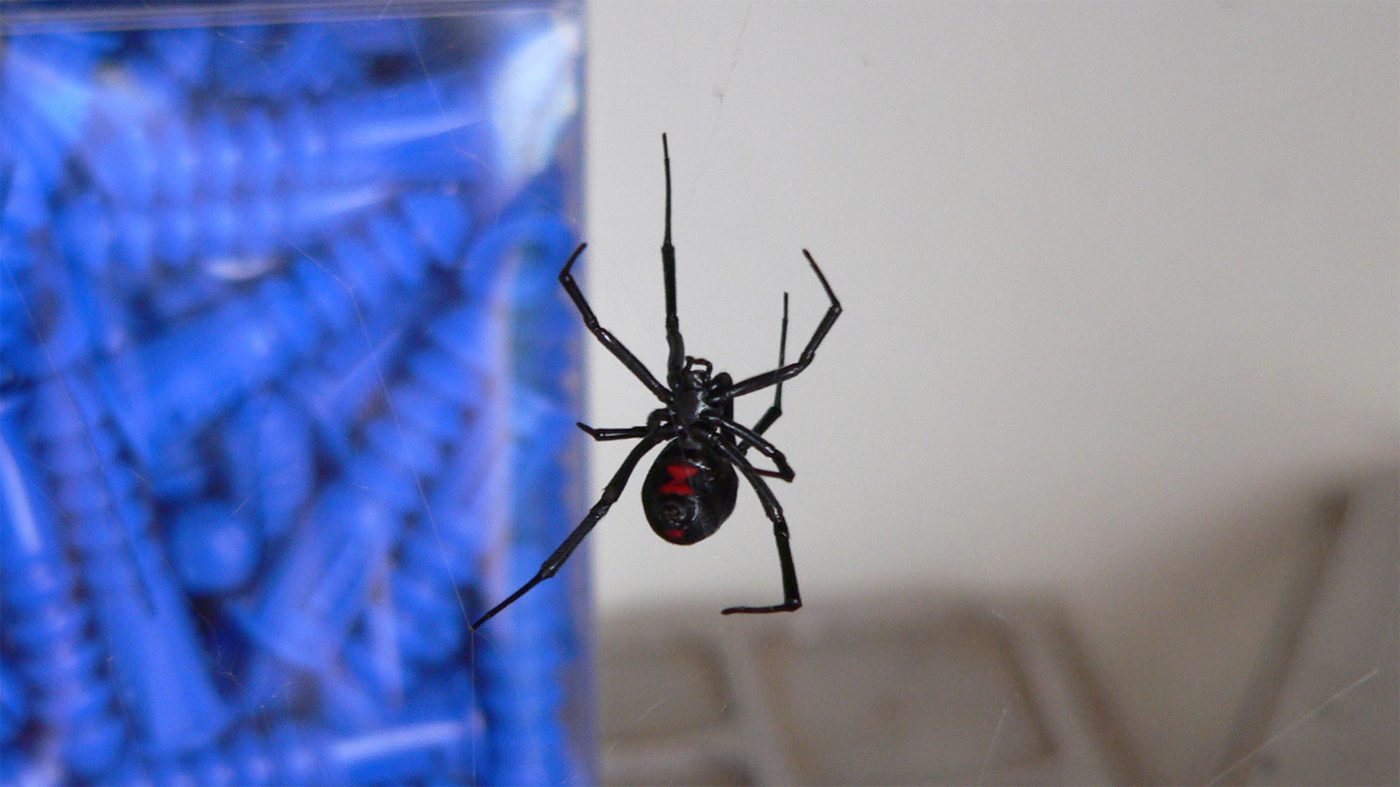
Even the signature marking is less fixed than its reputation suggests. The red hourglass on the underside of the abdomen is the most cited identification feature, but it is not universal even within a single species: some individuals show a complete hourglass, others show two separate reddish triangles that never quite connect, and marking shape varies enough across the genus that entomologists treat it as a strong clue rather than a guaranteed diagnostic. The taxonomy underneath a feared common name turning out to be more varied than the name implies is a recurring pattern in this corner of natural history: wolf spiders carry a similarly outsized reputation for necrotic bites that 45 confirmed clinical cases never actually produced. The rest of FactCrumbs' Arachnids coverage checks similar reputations against the record, including camel spiders and trapdoor spiders.